Dec 09, 2025
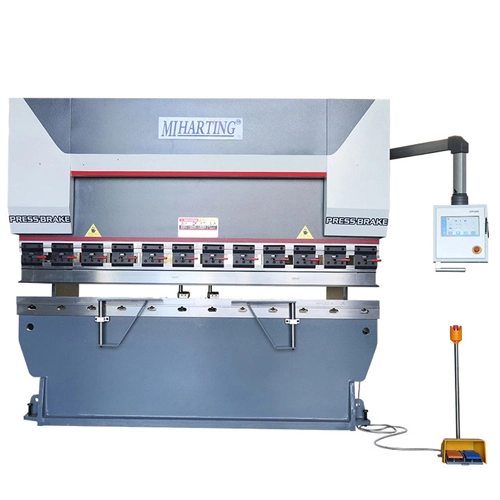
Choosing the right press brake depends on production volume, required accuracy, operator skill level, and long-term cost control. For most sheet metal fabrication businesses, the decision comes down to three options: manual press brakes, torsion axis press brake machines, and CNC press brakes. Each serves a distinct role in modern metal forming, and selecting the wrong type can limit productivity or inflate operating costs.
This guide compares the three from a practical, business-oriented perspective—focusing on performance, accuracy, investment value, and real-world application.
For small to medium-sized workshops, torsion axis press brake machines often offer the best balance between cost, accuracy, and ease of operation. Manual press brakes require skilled operators and frequent adjustments, while CNC press brakes are better suited for high-volume, high-precision production environments. Torsion axis models bridge the gap by delivering consistent bending accuracy without the complexity or price of full CNC systems.
Manual press brakes are mechanically or hydraulically operated with minimal automation. Angle control and depth adjustment rely heavily on operator experience.
Low production volume
Simple bending tasks
Budget-constrained workshops
Maintenance-friendly environments with limited technical staff
Inconsistent bending accuracy
Low repeatability for batch production
High dependence on skilled labor
Slower setup and changeover times
Manual press brakes are increasingly viewed as entry-level or auxiliary machines rather than primary production assets.
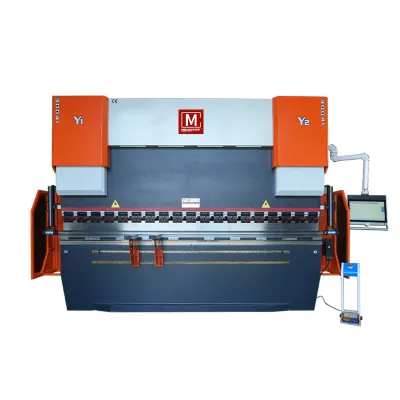
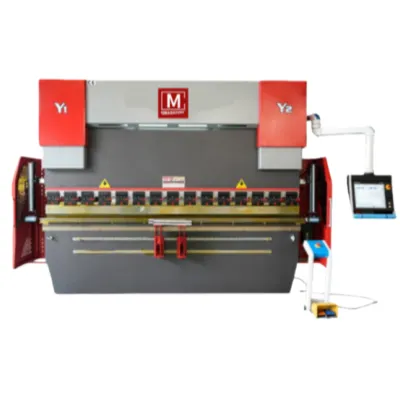
A torsion axis press brake machine uses a mechanical torsion bar to synchronize the movement of both sides of the ram, ensuring parallelism during bending. This design significantly improves repeatability compared to manual systems while remaining simpler and more cost-effective than CNC press brakes.
Stable and reliable ram synchronization
Good bending accuracy for most sheet metal applications
Lower investment and maintenance costs than CNC models
Easier operation and training requirements
Suitable for light to medium production volumes
General sheet metal fabrication
Cabinets, enclosures, doors, and frames
Workshops producing multiple part types in small batches
For businesses upgrading from manual machines, torsion axis press brakes often represent the most logical step forward.
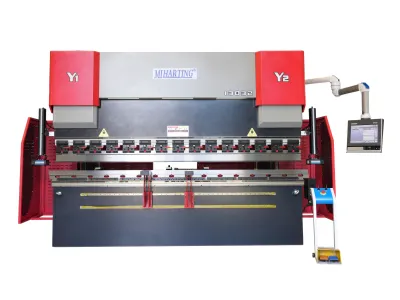
CNC press brakes use servo-hydraulic or electric control systems to manage ram position, backgauge movement, and bending sequences with high precision. They are designed for environments where accuracy, efficiency, and repeatability directly affect profitability.
Extremely high bending accuracy and consistency
Fast setup and program switching
Ideal for complex parts and tight tolerances
Reduced material waste
Lower dependence on operator experience
Higher initial cost
More complex maintenance
Requires trained operators or programmers
Overkill for low-volume or simple bending tasks
CNC press brakes deliver maximum value in high-volume, precision-driven manufacturing environments.
A torsion axis press brake machine delivers reliable and consistent accuracy for standard sheet metal bending, but it cannot match the dynamic compensation and micron-level control of a CNC press brake. However, for many applications, the accuracy difference does not justify the additional CNC investment.
In practical terms:
Torsion axis systems are accurate enough for most general fabrication work
CNC systems excel where tight tolerances and complex geometries are required
The performance gap is often smaller than the cost gap for many businesses
Instead of focusing solely on machine type, decision-makers should evaluate the following factors:
Production volume: Low, medium, or high
Part complexity: Simple bends vs multi-step geometries
Accuracy requirements: Functional vs precision-critical parts
Labor availability: Skilled operators vs standardized operation
Budget and ROI expectations
Future scalability
For many manufacturers, a torsion axis press brake machine provides the strongest return on investment when balancing performance and cost.
Some torsion axis press brakes can be equipped with digital readouts, NC controllers, or upgraded backgauge systems. While they cannot be fully converted into CNC press brakes, these enhancements can extend machine lifespan and improve usability without major capital investment.
There is no universal "best" press brake—only the most appropriate one for your production reality. Manual press brakes suit basic tasks and tight budgets. CNC press brakes dominate high-end, precision manufacturing. Between them, torsion axis press brake machines remain one of the most cost-effective and widely adopted solutions in the global sheet metal industry.
For businesses seeking dependable accuracy, manageable investment, and operational flexibility, torsion axis press brakes continue to play a critical role in modern fabrication workflows.


 English
  中文
中文