Jan 05, 2026

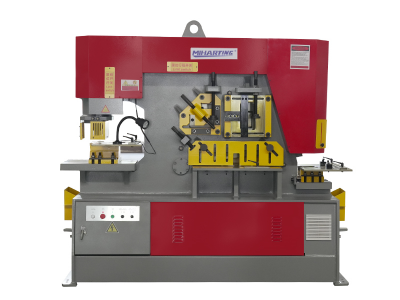
Tooling determines how effectively an ironworker machine performs punching, shearing, and notching operations. The right punches, dies, and accessories improve accuracy, reduce wear, and expand processing capability across different material types and thicknesses. For fabrication shops focused on productivity and cost control, tooling selection is as critical as the machine itself.
Standard ironworker machine tooling includes punches, dies, shear blades, and task-specific accessories. Each tool is designed to handle high-force operations on structural steel and plate while maintaining dimensional consistency.
Punches are responsible for creating clean, repeatable holes in steel plates, angles, and flat bars.
Round punches for standard bolt and fastener holes
Oblong and slot punches for adjustable connections
Square and rectangular punches for structural and electrical applications
Custom punches for non-standard profiles
Material thickness and tensile strength
Required hole tolerance
Punch-to-die clearance
Tool steel quality and heat treatment
High-quality punches reduce burr formation and minimize stress on the ironworker machine's hydraulic system.
Dies guide material deformation and directly influence hole quality and tooling lifespan.
Standard flat dies for plate punching
Angle dies for L-shaped sections
Channel and beam dies for structural profiles
Incorrect die clearance causes:
Excessive punch wear
Deformed holes
Increased machine load
Properly matched punch-and-die sets ensure smooth material flow and consistent results.
Tool life depends on material hardness, thickness, maintenance, and lubrication. In typical fabrication environments, well-maintained tooling delivers thousands of cycles before regrinding or replacement is required. Frequent inspection and correct setup significantly extend service life.
Ironworker machines use hardened shear blades for flat bar, angle, and plate cutting.
Four-edge blades to extend usable life
Precision-ground cutting edges
Replaceable designs for quick changeover
Rotate blades before edge wear becomes severe
Keep cutting surfaces clean
Maintain proper blade gap alignment
Sharp blades reduce cutting force and protect the machine frame.
Notching tooling enables fast corner cuts, slot creation, and joint preparation.
Fixed-angle notchers
Adjustable notching dies
Custom profile notch tools
These tools eliminate secondary cutting operations and improve workflow efficiency.
Pipe and tube notching attachments
Bar shearing guides
Angle cutting fixtures
Backstops and material positioning systems
Accessories allow one ironworker machine to replace multiple standalone machines, saving floor space and investment cost.
Tooling selection should align with:
Material type and thickness
Production volume
Required accuracy
Changeover frequency
Shops producing a wide range of parts benefit from modular tooling systems that allow fast swaps and flexible setups.
Many manufacturers offer custom punches, dies, and fixtures for unique profiles or industry-specific applications. Custom tooling improves efficiency when standard tools cannot meet dimensional or production requirements.
Daily and periodic maintenance prevents premature tool failure.
Clean tooling after each shift
Inspect for cracks, chips, or deformation
Ensure correct alignment before operation
Store punches and dies in dry, organized conditions
Proper maintenance protects both tooling and the ironworker machine itself.
An ironworker machine delivers its full value only when paired with well-matched, high-quality tooling. Punches, dies, and accessories directly affect productivity, accuracy, and operating cost. Investing in proper tooling and maintenance strategies ensures consistent performance and long-term reliability in demanding fabrication environments.

 English
  中文
中文