Jun 05, 2026
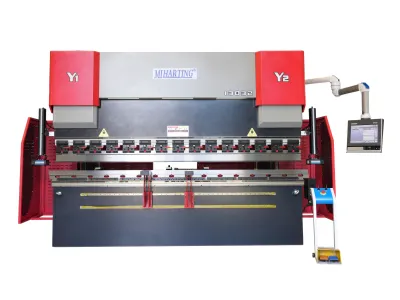
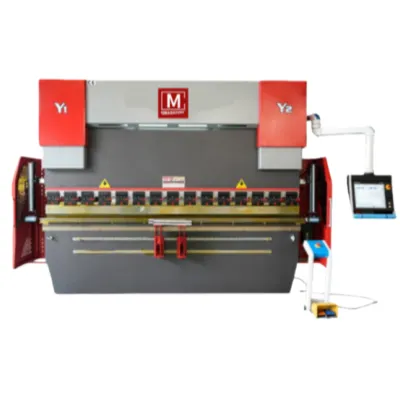
When buying a CNC press brake, it is necessary to comprehensively consider multiple factors, such as tonnage, bending length, price, the quality of hydraulic components, the frame manufacturing process, and backgauge precision.
These tips focuse on the comprehensive evaluation of the bending machine prior to purchase, examining key components such as the Rexroth valve assembly, Hoerbiger hydraulic system, CNC control system, tooling, and the manufacturing quality of the machine frame.
In 2026, press brake buyers are focusing on five major trends: servo-hydraulic systems, smarter CNC control, energy-saving operation, faster tool change, and production data integration. Fabricators are not only asking whether a machine can bend a part. They are asking whether it can bend the part repeatedly, accurately, and efficiently with less operator dependency.
Servo-hydraulic and electro-hydraulic CNC press brakes remain popular because they combine strong bending power with improved synchronization and control. For many workshops, especially those processing stainless steel, mild steel, aluminum, cabinets, automotive parts, doors, panels, and structural components, this type of machine offers an excellent balance between performance and cost.
However, the market also contains many “low-price” machines that look similar from the outside. The difference is usually hidden inside the hydraulic system, valve block, electrical cabinet, backgauge, frame processing, and tooling quality.
Many buyers start with a simple question: “How much is a 100-ton or 160-ton CNC press brake?” This is understandable, but it is also risky.
Two machines with the same tonnage and bending length can perform very differently. One may use reliable hydraulic valves, a rigid welded frame, precision linear guides, branded electrical components, and a stable CNC controller. Another may use cheaper parts, poor machining, and a frame that gradually loses accuracy under long-term load.
Before comparing price, buyers should confirm:
Maximum material thickness and bending length
Daily production material, not only occasional maximum thickness
Required angle accuracy and repeatability
Number of CNC axes
Type of CNC controller
Hydraulic valve and pump brands
Backgauge structure and guide rail quality
Frame welding, stress relief, machining, and assembly process
Tooling hardness, clamping system, and crowning method
A CNC press brake is a production asset. The cheapest machine is rarely the most economical machine.
The hydraulic system is the heart of a hydraulic press brake. It directly affects bending force, ram movement, synchronization, pressure stability, noise level, and maintenance cost.
When auditing a machine, buyers should ask for the hydraulic configuration clearly. For premium or higher-grade machines, internationally recognized hydraulic brands such as Bosch Rexroth and Hoerbiger are often used or requested by buyers because of their reputation in industrial hydraulic control.
A proper hydraulic audit should include:
Valve group brand and model
Pump brand and specification
Sealing system quality
Oil pipe and connector brand
Pressure stability under load
Leakage prevention design
Availability of spare parts
Supplier documentation and photos before shipment
For example, Rexroth hydraulic valves are widely recognized for precise pressure and flow control in electro-hydraulic systems. Hoerbiger hydraulic solutions are also commonly associated with high-performance press brake applications. If a supplier claims to use these components, buyers should request photos, nameplates, model numbers, and inspection documents.
Miharting’s CNC press brake configurations emphasize branded components and transparent machine configuration. Its DA53T electro-hydraulic press brake page lists high-value components such as DELEM control, Schneider electrics, Siemens motor, Bosch Rexroth hydraulic system, Sunny oil pump, EMB tube connectors, and Hiwin backgauge components. This kind of configuration transparency helps buyers understand what they are really paying for.
A CNC press brake frame must resist heavy bending force every day. If the frame is not rigid enough, even a good CNC system cannot fully correct long-term mechanical instability.
Low-price machines often reduce cost in frame steel thickness, welding quality, stress relief, machining accuracy, and assembly process. These shortcuts may not be visible in product photos, but they show up later as angle deviation, uneven bending along the full length, vibration, and repeated adjustment.
A serious frame audit should check:
Full steel welded structure
Stress relief treatment after welding
CNC machining of key mounting surfaces
Finite element analysis or structural optimization
Ram and worktable parallelism
Frame rigidity under rated load
Mechanical or CNC crowning system
Final full-length bending test
Miharting highlights rigid frame design and structural optimization using tools such as UG, ANSYS, and CAD for its press brake frame design. For buyers, this matters because frame quality is not a “luxury feature.” It is the foundation of bending accuracy.
In 2026, the CNC controller is one of the biggest differences between an ordinary press brake and a productive bending solution. A good CNC system improves programming speed, bending sequence planning, crowning compensation, axis control, and operator efficiency.
Buyers should check whether the controller supports:
2D graphical programming
Automatic bending sequence calculation
Crowning control
Multi-axis control
Servo drive or frequency converter integration
USB or offline programming
Material, tooling, and product libraries
Clear interface for operators
DELEM, ESA, and CYBELEC are common choices in professional press brake applications. Miharting supports internationally known CNC systems including DELEM, ESA, and CYBELEC, with options such as DA53TX, DA58TX, DA66TX, and higher configurations depending on production needs.
For many buyers, the best choice is not always the most expensive controller. It is the controller that matches the actual part complexity, operator skill level, and production volume.
A CNC press brake is not only a machine body. Tooling, clamping, crowning, and backgauge design also determine final bending quality.
Poor tooling can wear quickly, damage parts, and create inconsistent angles. A weak backgauge can cause dimensional errors even if the hydraulic system performs well. Lack of proper crowning compensation can create different angles between the center and ends of long workpieces.
Before buying, check:
Tooling hardness and grinding accuracy
Quick clamping option
Mechanical or CNC crowning
Backgauge axis configuration
Linear guide and ball screw quality
Repeat positioning accuracy
Suitability for complex parts
Miharting provides hardened and ground tooling, modular quick-change options, mechanical crowning, and multi-axis backgauge configurations for different bending requirements. These features help reduce setup time and improve production consistency.
A low-price CNC press brake quotation may hide cost reductions in places buyers do not immediately see. Common traps include:
Generic hydraulic valves instead of branded valve groups
Lower-grade pumps and seals
Thin or poorly processed frames
Basic controller with limited functions
Low-precision backgauge
No real crowning system
Soft tooling with short service life
Poor electrical cabinet layout
No clear spare parts plan
Limited after-sales support
The result is often higher scrap rate, longer setup time, more maintenance, and unstable bending accuracy. In other words, the machine saves money at purchase but loses money during production.
Miharting focuses on high-configuration sheet metal machinery for global buyers who need both quality and cost control. Instead of competing only on the lowest price, Miharting emphasizes practical value: branded components, rigid frame design, CNC control options, reliable hydraulics, accurate backgauge systems, durable tooling, and export-oriented service.
For buyers comparing CNC press brakes in 2026, Miharting offers several advantages:
High configuration at a competitive price
Bosch Rexroth hydraulic system options
DELEM, ESA, and CYBELEC CNC control options
Siemens, Schneider, Sunny, EMB, and Hiwin component choices
Rigid welded frame with structural optimization
Mechanical crowning and multi-axis backgauge options
Fast delivery for standard models
Custom machine solutions for different industries
Suitable for sheet metal, automotive, construction, decoration, machinery, and industrial production
This makes Miharting a strong option for buyers who want more than a cheap machine, but do not want to overpay for unnecessary premium-brand margins.
Before placing an order, ask your supplier these questions:
What exact hydraulic valve, pump, and connector brands are used?
Can you provide photos of Rexroth, Hoerbiger, or other branded hydraulic components if included?
What CNC controller model is installed?
How many CNC axes does the machine support?
Is the frame stress-relieved and CNC-machined?
Does the machine include mechanical or CNC crowning?
What is the backgauge structure and repeatability?
What is the tooling hardness and material?
Can you provide a bending accuracy test before shipment?
What spare parts and after-sales service are available?
A reliable supplier should be willing to answer these questions clearly.
The best CNC press brake in 2026 is not the cheapest machine on the quotation sheet. It is the machine that delivers stable accuracy, efficient operation, reliable hydraulics, strong frame rigidity, and long-term production value.
By auditing key components such as Rexroth valve groups, Hoerbiger hydraulic systems, CNC controllers, tooling, backgauge, and frame processing, buyers can avoid costly mistakes and identify the real value behind each quotation.
For manufacturers looking for a high-configuration and cost-effective CNC press brake, Miharting provides a strong balance of performance, reliability, and price. Before buying your next press brake, compare the details behind the machine, not just the number on the offer.
 English
  中文
中文