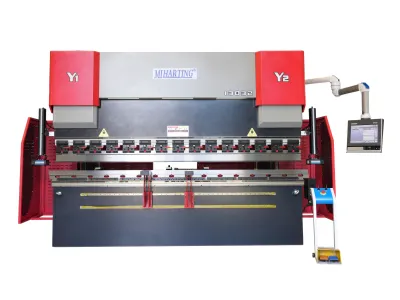
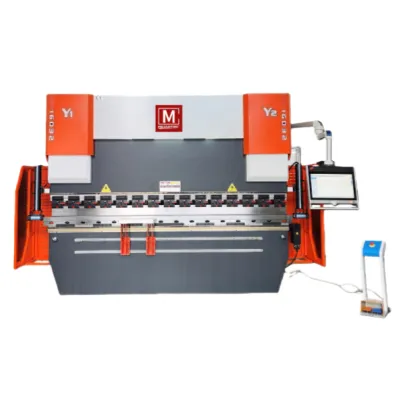
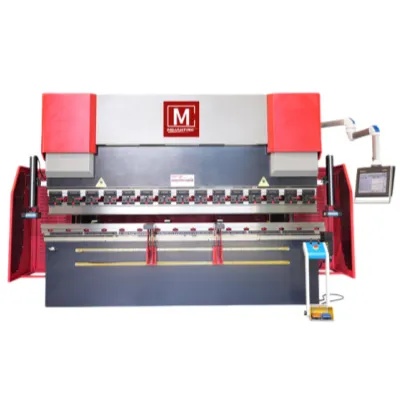
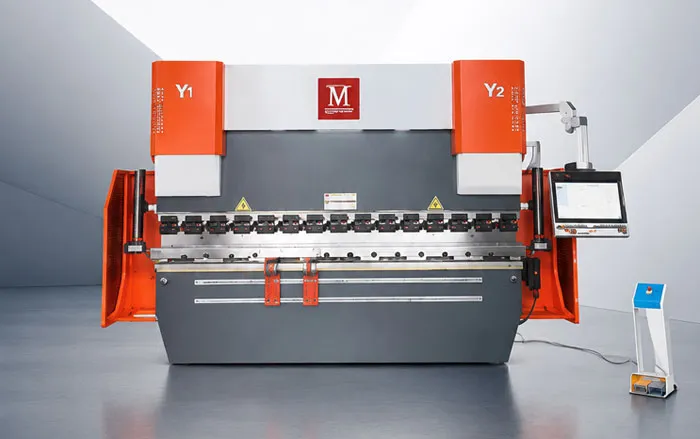
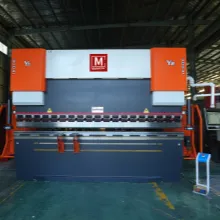
Choosing a CNC press brake is critical for precision metal bending. Its performance relies on 7 core components: hydraulic cylinder, proportional valve, CNC system, servo motor, electric crowning, tooling, and backgauge system. Below is a concise overview of the assembly process, key advantages, and top brand recommendations to help you select the ideal press brake and accessories.
1. Hydraulic Cylinder
Parts Assembly Process: Precision-mounted on both sides of the press brake frame, the piston rod connects to the ram with leak-proof seals. Bore and rod surfaces are honed for smooth movement, then tested under full pressure to ensure synchronization and no oil leakage.
Key Advantages: High precision (bending angle tolerance ±0.1°), durable forged steel body (resists deformation under heavy loads), leak-proof high-quality seals (lowers maintenance costs), and stable dual-cylinder synchronization (prevents eccentric bending).
Top Brands: Bosch Rexroth (Germany, industry-leading precision and longevity), Parker (USA, ideal for high-tonnage machines), NOK (Japan, premium leak-proof seals), Local Premium (China, cost-effective for standard use).
2. Proportional Valve
Parts Assembly Process: Installed in the hydraulic circuit (connected to the oil pump and cylinders), it receives CNC signals to regulate oil flow and pressure, controlling ram speed and synchronization. Calibration ensures precise response to CNC commands.
Key Advantages: Precise flow control (±0.01mm positioning accuracy), millisecond-level response (boosts efficiency), energy-saving (reduces consumption by 15–20%), and stable synchronization (prevents ram tilting).
Top Brands: Bosch Rexroth (Germany, top choice for high-end machines), Vickers (USA, reliable for medium-to-high precision), Yuken (Japan, cost-effective for standard tasks).
3. CNC System
Parts Assembly Process: Mounted on the control panel, connected to the servo motor, proportional valve, backgauge, and crowning system. Wiring is organized for anti-interference; software is installed and calibrated for 3D programming, bend simulation, and multi-axis control.
Key Advantages: High-precision multi-axis control (±0.01mm repeat positioning), 3D programming (cuts setup time by 50%), user-friendly touchscreen (multi-language support), and upgradable axes for complex tasks.
Top Brands: DELEM (Netherlands, popular with powerful software like DA66T/DA69W), CYBELEC (Switzerland, high-end for complex parts), ESTUN (China, cost-effective for budget projects).
4. Servo Motor
Parts Assembly Process: Mounted on the backgauge and hydraulic pump (hybrid models), connected to the CNC system via encoders for closed-loop control. Precise alignment with ball screws/ hydraulic pumps and calibration ensure speed and position accuracy.
Key Advantages: High efficiency (30–50% energy savings vs. standard motors), low noise (60–70dB), fast response (boosts efficiency by 10–15%), and precise closed-loop control.
Top Brands: ESTUN (China, widely used, cost-effective), Siemens (Germany, high precision for heavy-duty use), Mitsubishi (Japan, stable for medium-to-high precision tasks).
5. Electric Crowning System
Parts Assembly Process: Installed under the worktable, connected to the CNC system. Uses servo motors and ball screws to adjust worktable deflection in real time, calibrated to match ram movement for consistent bending angles.
Key Advantages: Real-time deflection compensation (±0.1° angle consistency for long workpieces), high precision (±0.001mm), CNC-controlled easy adjustment (no manual shimming), and low maintenance (no mechanical wear).
Top Brands: DELEM (Netherlands, integrated with CNC system), Bosch Rexroth (Germany, reliable for heavy loads), Local Premium (China, cost-effective for standard applications).
6. Press Brake Tooling (Punches & Dies)
Parts Assembly Process: Mounted on the ram (punches) and worktable (dies) via quick-clamping systems. Proper alignment is ensured; V-die opening is selected based on material thickness (8× for mild steel), and tooling is secured to prevent movement.
Key Advantages: High precision (hardened steel 50–56 HRC, smooth surface finish), versatility (standard/special tooling for various bend shapes), durability (resists wear for high-volume production), and quick change (60% reduction in tool change time).
Top Brands: WILA (Netherlands, premium precision and longevity), Bystronic (Switzerland, compatible with most machines), Local Premium (China, cost-effective for standard bending).
7. Backgauge System
Parts Assembly Process: Mounted on the machine’s rear, connected to the servo motor via ball screws and linear guides. Calibrated with the CNC system for precise positioning; X/R axes adjust for workpiece accuracy, with anti-collision sensors for safety.
Key Advantages: High positioning accuracy (±0.01mm repeatability), multi-axis movement (X/R/Z for complex parts), fast servo-driven response (boosts efficiency), and stable heavy-duty design (maintains accuracy long-term).
Top Brands: HIWIN (Taiwan, China, high-precision linear guides/ball screws), THK (Japan, smooth movement for high-speed positioning), ESTUN (China, cost-effective for standard systems).
 English
  中文
中文