Feb 25, 2026
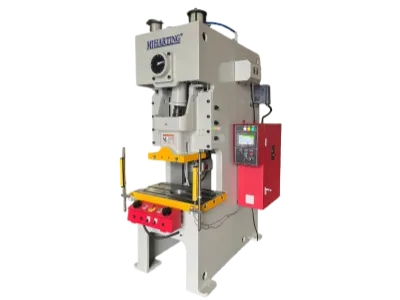
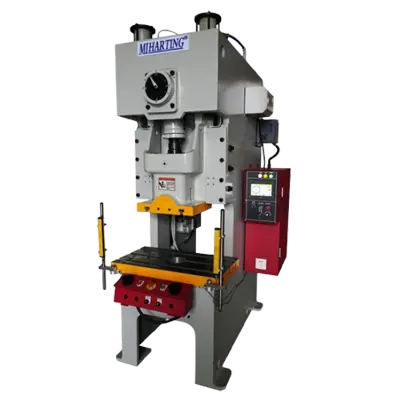
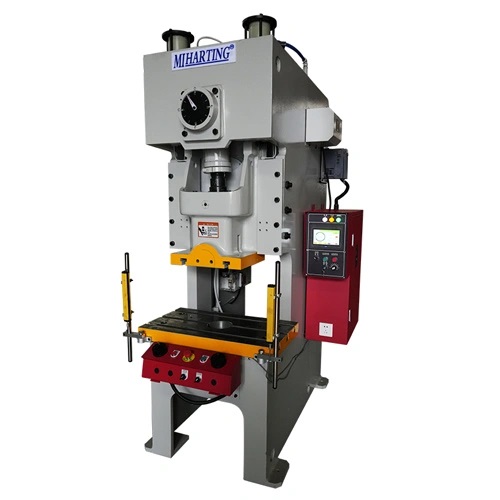
A pneumatic punching machine is a compressed-air-driven press system used to punch, pierce, emboss, notch, or form materials such as metal sheets, aluminum profiles, copper busbars, plastic components, and composite panels. Compared with mechanical or hydraulic presses, it delivers fast cycle speeds, clean operation, lower maintenance requirements, and excellent suitability for light-to-medium duty industrial production.
Modern systems include automatic pneumatic punching machines equipped with PLC control, servo feeding, safety guarding, and multi-station tooling, making them ideal for precision manufacturing and continuous production lines.
A pneumatic punch press machine uses compressed air to drive a piston inside a cylinder, converting air pressure into linear force. This force moves a punch downward against a die to shear or form material.
Unlike mechanical presses that rely on flywheels or hydraulic presses that depend on oil pressure, a pneumatic punch press operates through regulated air pressure — typically between 0.5–0.8 MPa (70–120 PSI).
Clean power source (compressed air)
Fast response and short cycle times
Adjustable stroke and force control
Compact footprint
Ideal for light and medium tonnage applications
Pneumatic punching systems are widely used in:
Sheet metal fabrication
Electrical cabinet manufacturing
Automotive bracket production
HVAC duct processing
Electronics chassis forming
The working mechanism of a pneumatic punching machine is based on air compression and force transmission.
An air compressor supplies pressurized air to the system through:
FRL unit (Filter, Regulator, Lubricator)
Solenoid valves
Flow control valves
Compressed air enters the cylinder chamber, pushing the piston downward. The force output is calculated as:
Force=AirPressure×PistonArea
For example:
0.6 MPa pressure
100 mm diameter cylinder
Output force ≈ 4.7 tons
The piston connects to a ram and punch tool.
Downstroke: Material shearing occurs
Return stroke: Spring or reverse air pressure retracts the piston
In an automatic pneumatic punching machine, additional components include:
PLC controller
Servo feeder
Touchscreen HMI
Safety light curtains
Multi-station tooling system
This allows continuous punching with precision repeatability.
To outperform standard market offerings, advanced pneumatic punch press machines incorporate the following engineering features:
Cycle rates can reach 60–150 strokes per minute depending on stroke length and material.
Unlike hydraulic systems, pneumatic machines consume power only during active stroke cycles.
No hydraulic oil leaks
Fewer mechanical wear components
Simple cylinder replacement
Stroke length can be customized for:
Shallow embossing
Deep punching
Multi-step forming
Quick die change systems reduce downtime.
Modern machines integrate:
Two-hand control
Emergency stop systems
CE-compliant guarding
Pressure monitoring sensors
Pneumatic punching machines are widely applied across multiple manufacturing sectors.
Hole punching
Slotting
Notching
Edge trimming
Copper busbar punching
Distribution cabinet panel perforation
Switchgear plate processing
Bracket forming
Mounting hole punching
Interior metal components
Steel framing connectors
Ventilation duct flange punching
Light gauge metal processing
Enclosure punching
Control panel processing
Appliance housing manufacturing
Compared with mechanical punch presses, pneumatic systems offer quieter operation and better adaptability for medium-volume production.
Selecting the right system requires evaluating technical and operational factors:
Calculate based on:
Material type
Thickness
Hole diameter
Shear strength
Shorter stroke = faster speed
Longer stroke = deeper forming capability
Manual pneumatic punch press
Semi-automatic system
Fully automatic pneumatic punching machine with servo feeding
Consider:
Standard die sets
Custom mold integration
Quick-change tooling
High-volume production benefits from:
PLC-controlled automation
Integrated material feeding
Multi-station turret systems
Ensure:
CE or equivalent certification
Overload protection
Pressure monitoring system
Mild steel, stainless steel (thin gauge), aluminum, copper, brass, plastics, rubber sheets, and composite panels.
It is ideal for light to medium-duty applications. For heavy deformation or thick steel plates, hydraulic presses are more suitable.
Typically between 0.5–0.8 MPa, depending on cylinder size and required tonnage.
With proper maintenance, industrial-grade systems can operate reliably for 8–15 years.
Yes. Automatic pneumatic punching machines can integrate with:
CNC feeders
Robotic arms
Conveyor systems
MES production monitoring systems

 English
  中文
中文