Feb 10, 2026
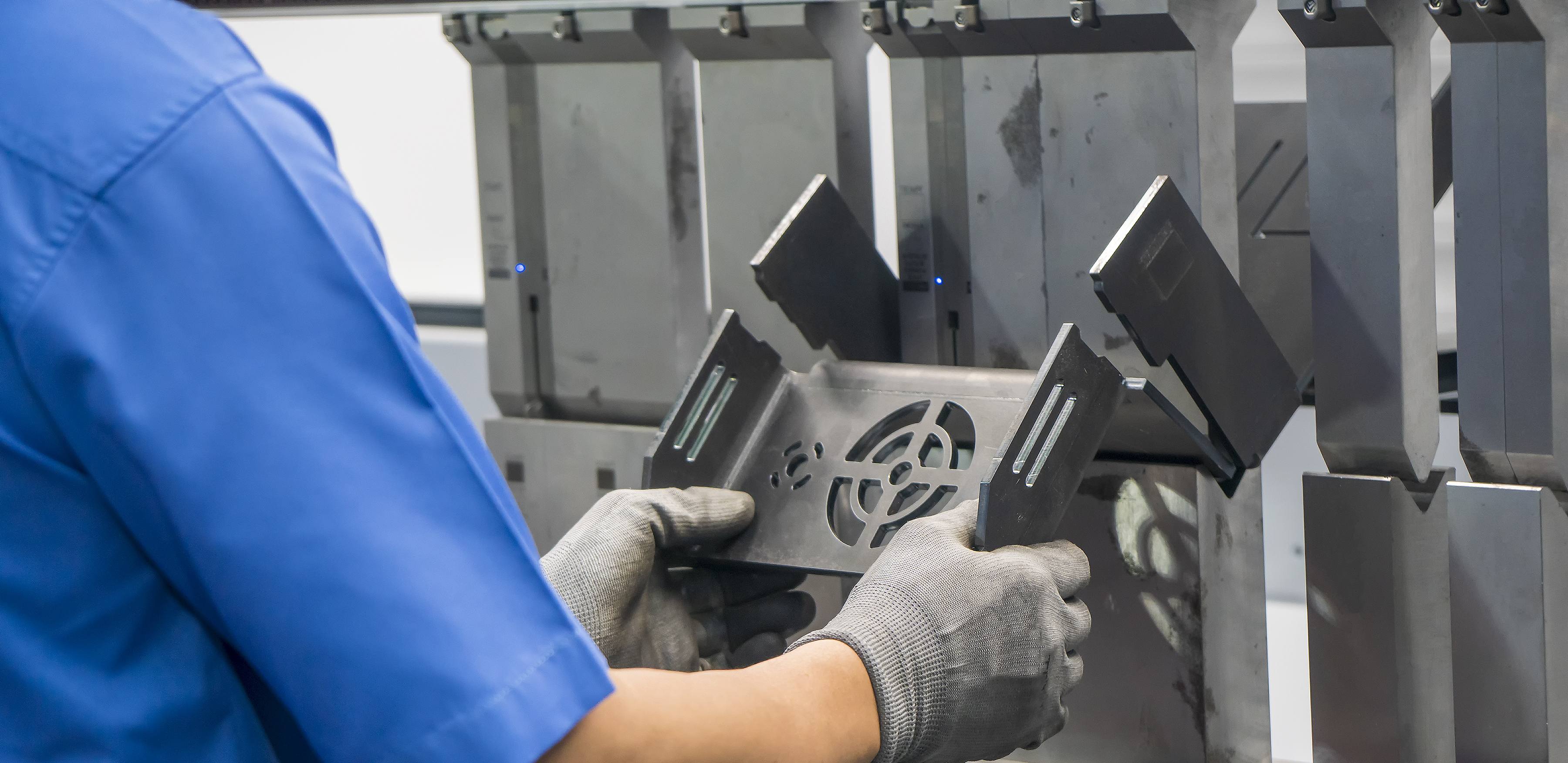
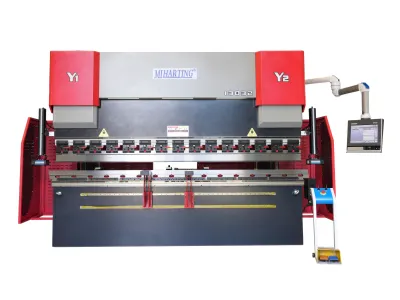
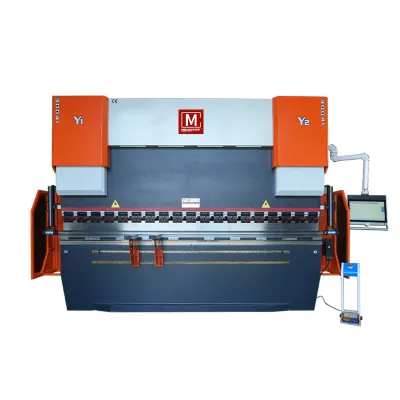
A press brake machine is industrial bending equipment that forms sheet metal by applying precisely controlled force through synchronized hydraulic cylinders and CNC positioning systems.
Two dominant technologies define today’s market:
Torsion bar press brake (mechanical synchronization)
Electric hydraulic press brake machine (servo-controlled closed-loop synchronization)
Torsion bar systems offer structural simplicity and cost efficiency for standardized production. Electric hydraulic press brake machines deliver superior precision, dynamic compensation, and automation readiness for advanced manufacturing.
Selecting the correct press brake equipment depends on production accuracy, material type, bending length, automation level, and long-term ROI—not just initial purchase price.
This guide provides a technical evaluation framework for manufacturers, fabrication engineers, and industrial buyers.
A torsion bar press brake is a hydraulic bending system that uses a mechanical torsion shaft to synchronize the movement of two hydraulic cylinders.
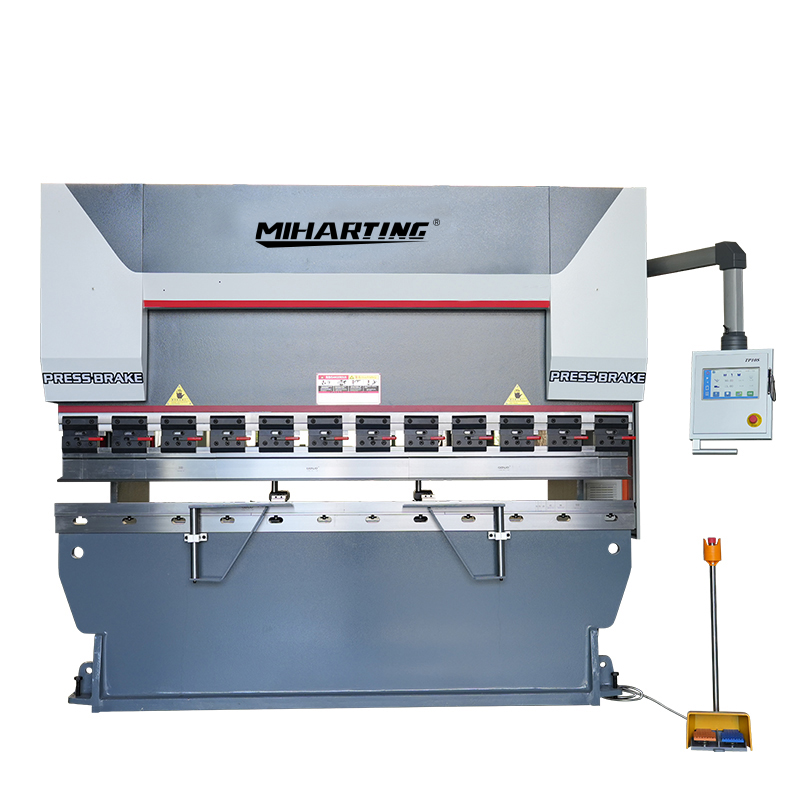
Two cylinders drive the ram
A torsion shaft connects both sides
Mechanical torque resistance maintains parallelism
Limited electronic feedback (NC or basic CNC)
This design ensures stable, repeatable bending in mid-precision applications.
| Parameter | Torsion Bar Press Brake |
|---|---|
| Synchronization | Mechanical torsion shaft |
| Control Level | NC / entry CNC |
| Typical Axes | Y1, Y2, X |
| Position Accuracy | ±0.05–0.1 mm |
| Investment Cost | Moderate |
| Maintenance Complexity | Low to medium |
Torsion bar systems remain highly effective in:
HVAC duct fabrication
Steel furniture production
Agricultural equipment parts
Standard brackets and enclosures
Structural carbon steel bending
For stable, repetitive bending operations without tight tolerance requirements, torsion bar technology remains economically viable.
An electric hydraulic press brake machine replaces mechanical synchronization with electro-hydraulic servo control.
Instead of a torsion shaft, synchronization is achieved through:
Linear encoders on both sides of the ram
Servo proportional valves
Closed-loop CNC control system
Real-time digital correction
Independent Y1/Y2 axis control
Continuous position feedback
Dynamic load compensation
Multi-axis configuration (X, R, Z1, Z2, V crowning)
| Parameter | Electric Hydraulic Press Brake Machine |
|---|---|
| Synchronization | Electro-hydraulic servo |
| Position Accuracy | ±0.01–0.02 mm |
| Repeatability | High |
| CNC Capability | Advanced multi-axis |
| Automation Integration | Excellent |
| Energy Efficiency | 30–50% improved with servo motor |
This system dominates high-end industrial bending applications where precision and consistency are critical.
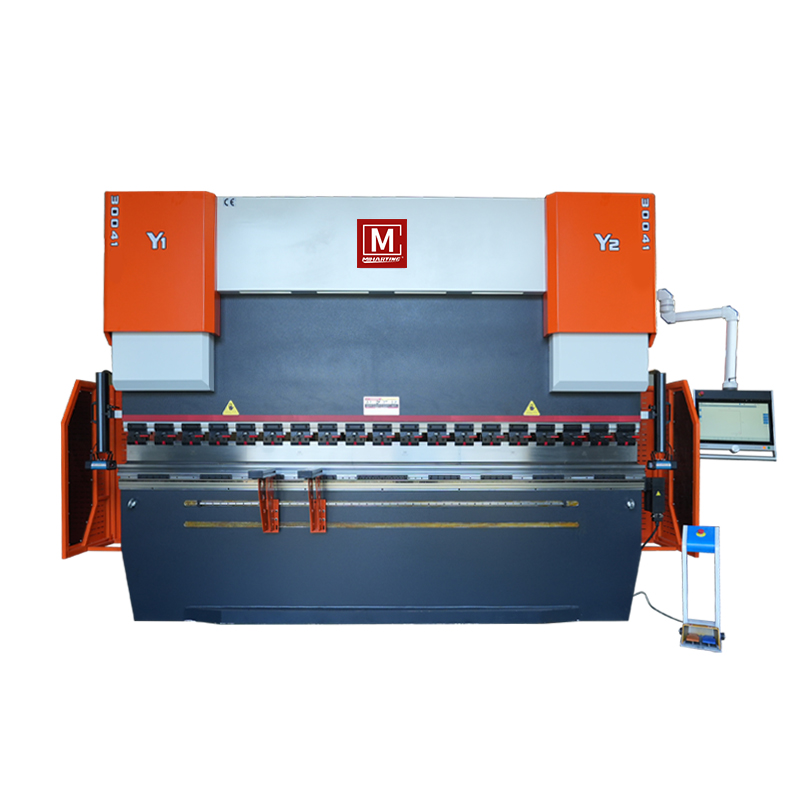
The core difference lies in synchronization logic and correction capability.
Torsion bar: Passive mechanical balancing
Electro-hydraulic: Active real-time correction
Electro-hydraulic systems maintain parallelism even under uneven load conditions.
Torsion bar systems may experience slight deviation during off-center bending.
Electric hydraulic systems support:
Robotic automation
Angle measurement systems
Industry 4.0 integration
Remote diagnostics
For manufacturers transitioning toward smart production, electro-hydraulic CNC press brake systems provide long-term flexibility.
Accuracy depends on:
Synchronization technology
Crowning system
Frame rigidity
CNC calibration
Tooling precision
Typical industrial ranges:
Torsion bar press brake: ±0.05–0.1 mm
Electric hydraulic press brake machine: ±0.01–0.02 mm
High-end systems also include:
Hydraulic crowning compensation
Automatic angle correction
Thermal deformation monitoring
Precision is not only a machine specification but a system-level integration outcome.
Required tonnage depends on:
Material type
Thickness
Bending length
Die opening
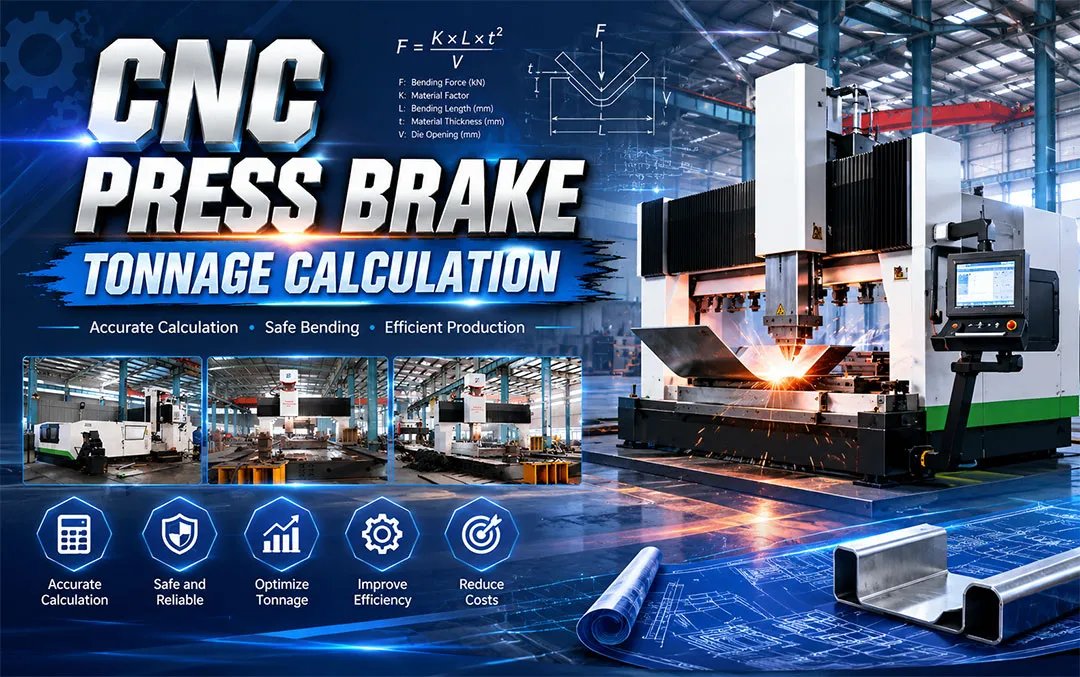
General calculation formula:
Tonnage ≈ (Material Thickness² × Bending Length × Constant) ÷ Die Opening
Accurate tonnage calculation prevents:
Overloading
Frame deformation
Reduced accuracy
Excessive energy consumption
Professional press brake equipment suppliers should provide verified tonnage charts.
When evaluating a press brake machine for sale, industrial buyers should consider:
Production Volume
High-volume production favors CNC electric hydraulic systems.
Material Range
Thicker plates require higher tonnage and stronger frames.
Accuracy Requirements
Precision components demand electro-hydraulic control.
Frame Construction
Stress-relieved welded mono-block frames offer superior rigidity.
Hydraulic System Brand
Industrial-grade components improve reliability.
Controller System
Common industrial controllers include Delem, ESA, and Cybelec.
Crowning System
Essential for bending lengths over 2500 mm.
Long-Term ROI
Energy consumption and maintenance cost significantly affect lifecycle value.
For high-precision, automated, or complex bending operations, electric hydraulic systems outperform torsion bar designs in:
Accuracy
Automation compatibility
Load adaptability
Energy efficiency
For standardized, mid-accuracy production with budget sensitivity, torsion bar press brakes remain a practical solution.
The “better” option depends on operational requirements rather than machine classification
.
Modern press brake equipment should comply with:
CE Machinery Directive
ISO 16092 Metal Forming Safety Standards
Light curtain protection systems
Laser guarding systems
Emergency stop redundancy
Safety compliance is essential for global industrial markets.
Global fabrication trends indicate:
Increasing demand for stainless steel and precision components
Integration of robotic bending cells
Data-driven production management
Reduced tolerance margins
Electric hydraulic CNC press brake machines align with these developments.
A press brake machine is a strategic manufacturing investment rather than a simple piece of bending equipment.
Torsion bar press brakes provide stable, economical solutions for standardized production.
Electric hydraulic press brake machines deliver superior precision, scalability, and integration capability for advanced manufacturing environments.
Selecting the correct press brake equipment requires technical evaluation of synchronization method, control architecture, frame rigidity, and lifecycle efficiency.
Manufacturers that align equipment selection with production strategy achieve higher consistency, reduced waste, and improved long-term profitability.

 English
  中文
中文